Thursday, September 15, 2011

Greens Aerification

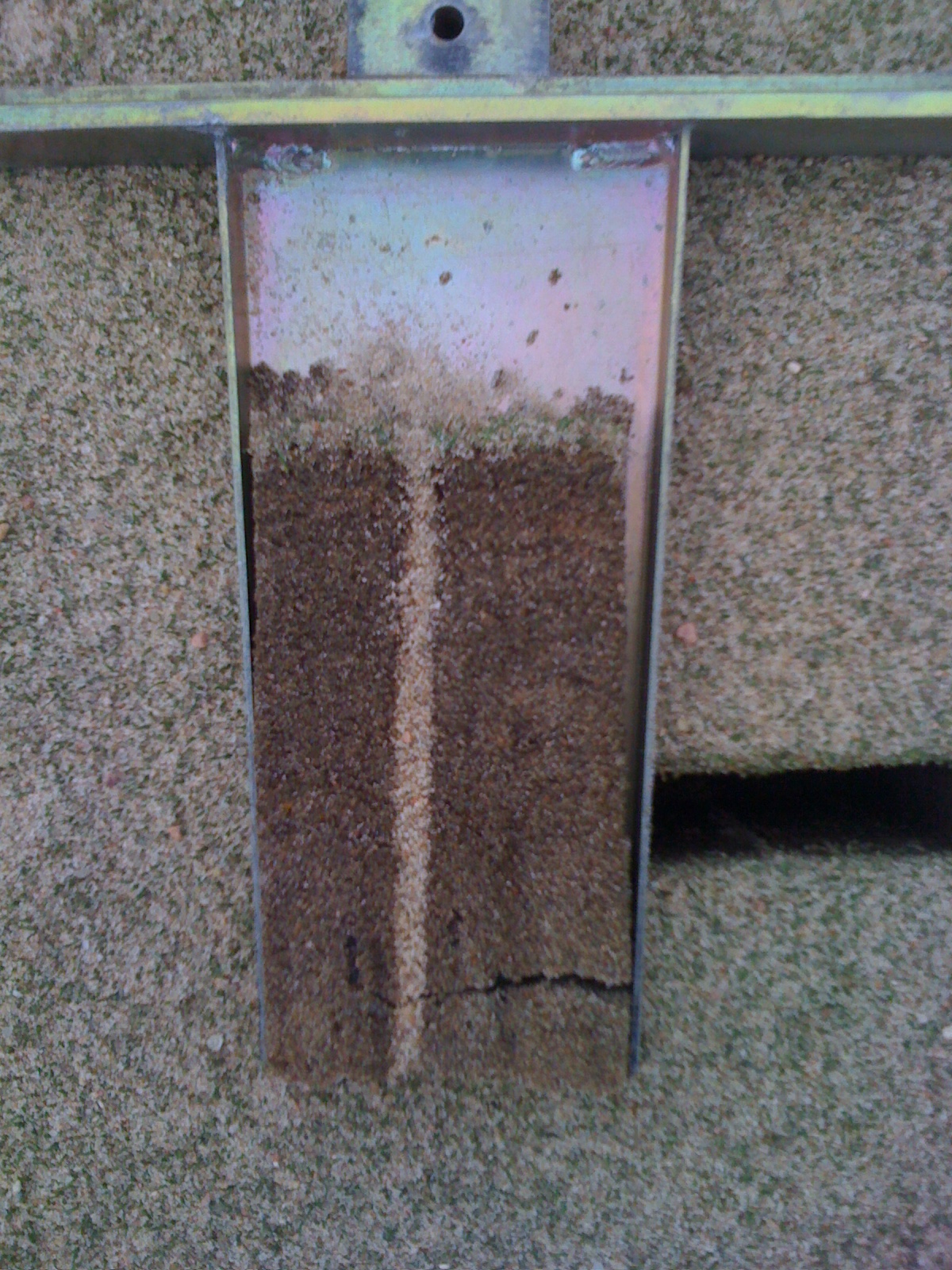
Close up of Aerification Hole
We are currently in the process of wrapping up our fall greens aerification.  The picture above is a close up of the soil profile following aerification.  As you can see, with our deep tine aerifier, we are able to punch a hole through the profile, which is then back filled with sand.

Aerification is the cure for many issues we struggle with on the greens.  Compaction relief, improved gas exchange, increased percolation rates, and thatch reduction are all direct benefits of aerification.  Although the practices typically take place when greens are looking their best.  With 60+ year old greens, without aerifcation, we would certainly see a decline in turf conditions.

Compared to our spring aerification, we typically are slightly less aggressive with the amount of holes and the size of the hole.  Due to the inconsistent weather patterns in the fall, we have found this type of aerification allows for a quick recovery without the risk of not healing over prior to the onset of dormant conditions.

Greens will be a little bumpy over the weekend but should be getting back to normal by the first of next week.  With rain in the forecast for the weekend, we may have timed this one perfect!

Friday, September 2, 2011

Record Setting Weather

It's official, the summer of 2011 will go down in the records books as the hottest summer in Wichita!  The good news is that it appears cooler days are just around the corner!

Although multiple records were broken this year, the two that stand out the most are the number of days over 100 degrees (currently at 52) and the average daily maximum temperature.  The average daily max is the average high temp from June 1st to August 31st.  During this time period our average daily max was 98.3 degrees.  To put that in perspective, the 6th hottest summer was a full 4 degrees cooler than the summer of 2011.

The good news is, with cooler temps on the way, its safe to say we have survived the record breaking heat wave of 2011.

Tuesday, August 30, 2011

Bermuda Control

Bermuda Control on #1 Approach
 
Bermuda Control on #4 Rough
This past week we started applications for controlling the Bermuda in the Zoysia.  Typically we would have started this application earlier, unfortunately, with the excessive heat we had these summer we were forced to delay this practice.

As you can see from the pictures above, the initial control seems to be as good as we have had.  Overall, the fairways are mostly clean, the new Zoysia Intermediate Rough is where we are concerned with the encroachment.  If you've been on the course lately it is even more noticable in person.  With two more applications scheduled for the remainder of the year, we hope to knock the Bermuda back.

Several years ago, we were spraying larger portions of the rough.  What we found was the product was simlply too hard on the desirable cool season grasses.  Spraying this every year on the rough was not only expensive, but also left our primary rough in bad shape for the majority of the golf season.  We have since reached the conclusion that if a change were to take place in the rough, the best option would be to spray Roundup in one season for a complete kill of the rough. 

With the summers we have experienced lately along with the increasing water rates, for the long term, we are leaning towards converting our primary rough (in full sun) to Zoysia.  Although, this is certainly a long term project with no action planned for the near future.

Tuesday, August 9, 2011

Goose Control

Floating Light on #8/11 pond.

A couple of weeks ago, we installed a solar powered flashing light on the pond between #8 and #11 green.  Intial results were somewhat questionable.  However, after two full weeks, we have definitely seen an improvement in the amount of geese hanging around this area overnight.

The light turns on automatically as the sun goes down, while recharging itself during the day.  The flashing light disrupts the geese's ability to sleep forcing them to move on to a different location.  Initially they moved to another area on the course.  Since that time they have left the course altogether.

As bad as the geese have been this year, we were willing to try anything.  This product has had mixed reviews at different locations, so far we are pleased with the results.

Friday, August 5, 2011

Crazy Weather

In spite of only a 20% chance of rain, Wednesday night brought us 2" of rain and 70 mph winds.  Although the rain was much needed, the rate at which it fell and the accompanying wind created quite a mess on the golf course Thursday morning.


Tree Branch down right side #14
  
Debris on #18 fairway
The pictures above show what was pretty typical throughout the course.  Luckily, we only lost 5 trees, although damage to the trees can be seen throughout the property.  The good news is that we desperately needed moisture, not only for the turf and trees, but our creeks and ponds were also in need of a good rain.

Heading into the weekend, it looks like we will be entering another long stretch of 100 degree days.

Tuesday, August 2, 2011

Heat Wave

The story for the past month (or more) has been the heat wave.  By the time the summer of 2011 is complete it will more than likely go down as the hottest and one of the driest summers on record for Wichita, Kansas.

With conditions like we are experiencing all of our programs are under extreme pressure from cultural practices (such as aerification, topdressing, and grooming) to our chemical programs (such as herbicide, fungicide, and fertility programs) to water management.  All of these programs must work together, along with all the other details we manage, to bring the golf course through the extreme conditions we are facing.

Water management has been high on our list since the beginning of the summer.  Walking the fine line between dry and not too dry is the daily challenge.  Not only is water expensive, too much water can cause more problems compared to not enough.  Hand watering, use of wetting agents, proper summer venting (aerification), and use of soil moisture sensors have all proven to be invaluable resources on a daily basis.

With one more month to go we will continue on the same path with the hope of some relief before fall arrives.  Certainly, the summer of 2011 will be one we won't forget any time soon.  

Thursday, June 30, 2011

Keep it in the Fairway

With the heat of summer upon us, please keep carts out of the rough as much as possible.  During the summer months, the Zoysia is growing aggressively, while the cool season grasses are having a difficult time handling the heat.  Reducing cart traffic in the rough is one of the most beneficial things we can do to keep the rough looking and playing its best through the hot summer months.

Below are a few key points to follow in order to reduce wear on the course.
  • Scatter.  Carts have a tendency to enter and exit at the same places.  When you see grass laying over from traffic, change your route to avoid driving in the same path as the other carts.
  • Avoid driving too close to bunkers.  Bunkers create pinch points that have a tendency to funnel traffic into the same area.  Over time compaction and wear lead to less desirable turf.
  • Stay at least 60 yards away from the greens.  Green complexes are sacred ground. Keep the carts on the path around greens.
  • Once you are on the fairway advance down the fairway to your next shot or your partner's ball, as opposed to driving back to the cart path for each shot.
  • Avoid parking around tees and greens with tires in the grass.  Cart paths have plenty of space for you to park completely on the path and still allow traffic through.  This is key for avoiding the bare ground a foot off the path around tees and greens.
  • Where possible, keep it on the path.  Balls in the rough on the cart path side of the hole can typically be reached easily with a short walk from the path.
Thank you for doing your part keeping the course looking its best!